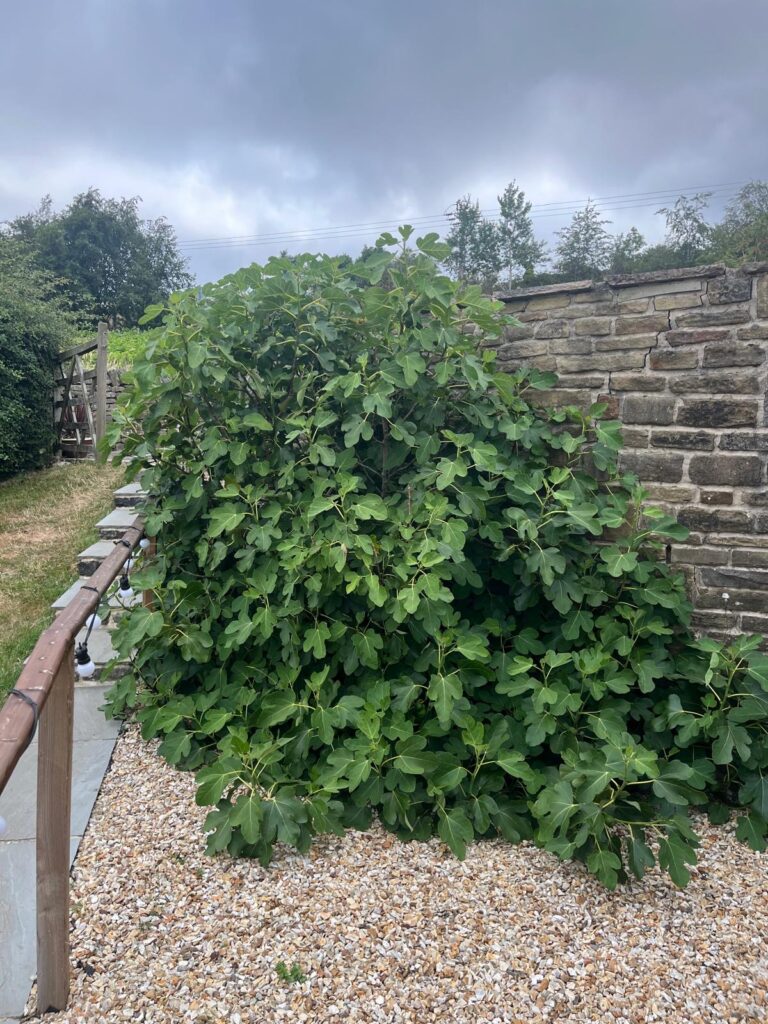
The Helme Edge Vineyard visitor experience begins on the steps leading down to our tasting room, where guests are greeted by a thriving fig tree with a remarkable story. Originally bought in a pot from Morrisons, our Brown Turkey fig tree has produced more than 100 ripe figs each year for the past five years.
Growing successfully at around 320 metres above sea level, with sweeping views across the Pennine landscape, the fig tree provides a striking example of how the changing climate is affecting what can be grown in Yorkshire. For us, its success is a powerful local indicator of climate change in the Pennines and the gradual shift in growing conditions across northern England.
The impact of climate change on English viticulture is even more significant. Warmer temperatures and longer growing seasons now make it possible to grow vines and ripen grapes in areas once considered too cool for commercial wine production. At Helme Edge Vineyard, we grow modern hybrid grape varieties such as Solaris, which has been specially developed to ripen early and offer greater resistance to disease. These qualities make it particularly well suited to a high-altitude Yorkshire vineyard.
Further south, warmer conditions have helped create a major new industry producing English sparkling wine from traditional Champagne grape varieties, including Chardonnay. Other crops are also benefiting from the changing climate, with maize and sunflowers becoming more common in the UK, while crops such as soybeans are now being trialled.
As part of a vineyard tour and wine tasting at Helme Edge Vineyard, visitors can learn more about the relationship between climate change, grape growing and English wine production. Our visitor experience includes an accessible overview of how changing weather patterns are influencing viticulture, crop choices and the future of farming in Yorkshire and across the UK.